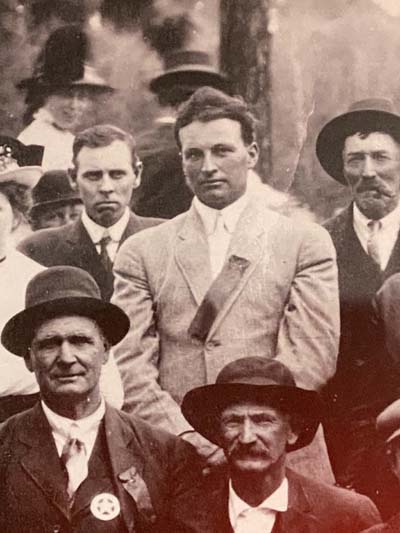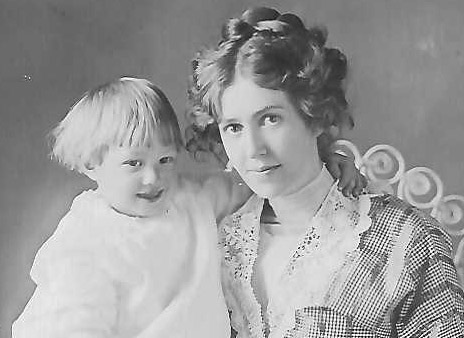
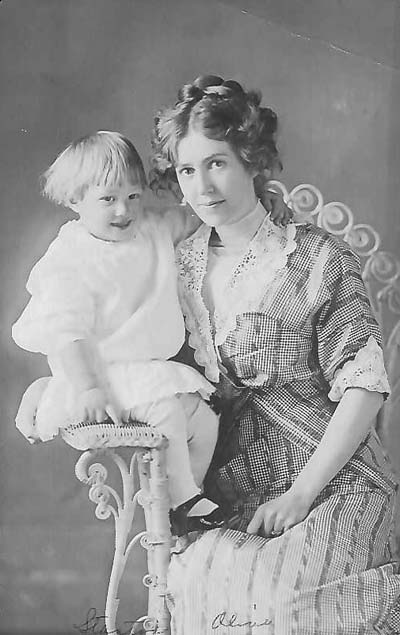
Stanton and Olive, About 1915
The Ganders
Family History
Revised April 2, 2024
Click for Powerpoint Presentation
to the Eastern Klickitat County
Historical Society
 |
 |
 |
 |

|
Stanton and Olive, About 1915 |
The Ganders Family History Revised April 2, 2024 Click for Powerpoint Presentation to the Eastern Klickitat County Historical Society
|
|
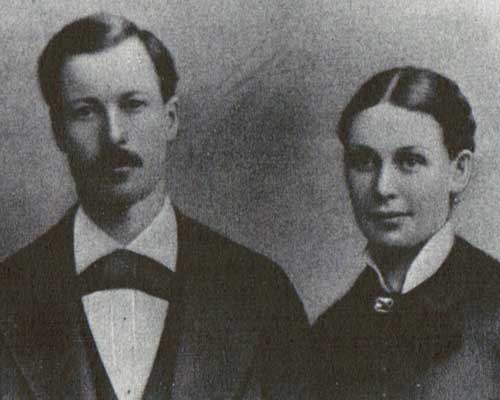 JJ and Leah Ganders |
Gander
as a Swiss name dates back in written records nearly 700
years to 1324
A.D.*** Firm ancestral links to our family lead to Willi Gander, born in 1526. Much of the family records are recorded in German in Gsteig, a town in the canton of Bern, Switzerland, just eight miles from the French-speaking region. The name originated from the "Gands," the fertile agricultural slopes (glacial moraines) of the Bernese Oberland (The higher and southern part of the Bern "canton" or Swiss state). The Gander Family (Johann Jakob and L'ea Gander) came to Washington Territory from the Swiss-German portion of Switzerland in 1884 and we, the family descendants, still reside in what is now the state of Washington. |
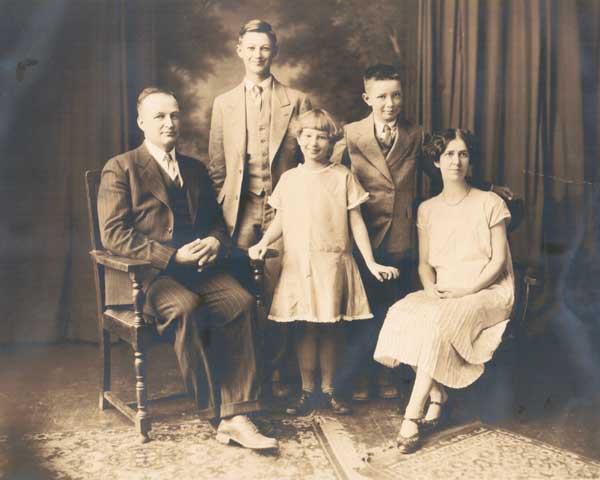 Sam and Olive Ganders Stanton, Ruth and Dean |
Upon arrival to Washington Territory, the Gander Family
members spoke Swiss-German and Swiss-French. Johann Jakob
was Swiss-German and L'ea was Swiss-French. They could read English but did not speak it. Johann was a landscaper. L'ea was the daughter of Huguenot parents and grandparents. The couple came directly to the Pacific Northwest from Switzerland to homestead and were attracted by the plentiful bunchgrass, canyons full of wildflowers, distant alpine-like views of Mt. Adams and Mt Hood, a reputation for being good cattle country, and unusual geology (that many years later was confirmed to be caused by a great post-glacial flood as Johann had reasoned). |
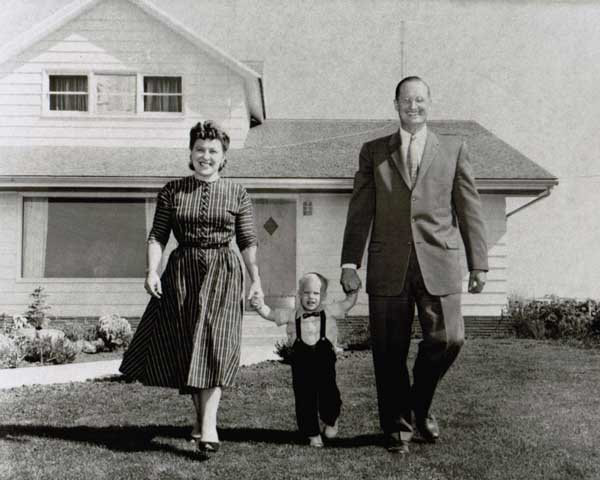 Betty and Stanton Ganders, & Larry Bickleton Farmhouse (Hooker Place) Campaign photo, About 1958 |
Johann (Larry's great grandfather)
first made the 7,000-mile trip to the Bickleton Country alone. He
sailed from Le Havre, France, on the 394-foot "Labrador"
steamship.
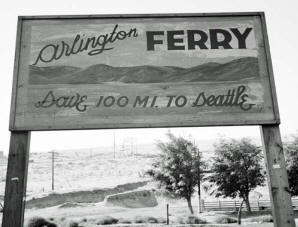
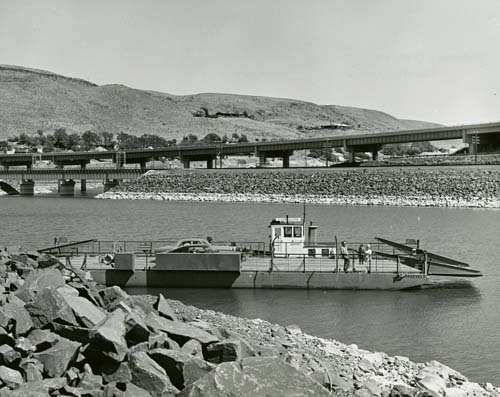
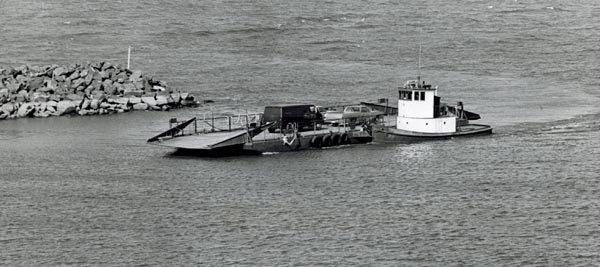
The rest was a journey across the United States by train to Alkali (Arlington, Ore) and a Columbia River ferry crossing to the north bank which today is Roosevelt, Wa. He hiked about 25 miles or more from the river crossing to the Bickleton Trading Post with two bags and an alpine backpack. It was 2,000 feet above the river crossing. Johann Gander found remaining homestead lands in 1884 unsuitable. At that trading post, he found someone named Mannheim who also spoke Swiss and advised him to purchase a nearby farm. He ended up purchasing better land elsewhere in the county, near Bickleton, WA. The property was known then as the Smith Homestead near a rural post office called "Bluelight." They raised polled (hornless) Hereford cattle and later expanded the farm for raising wheat after the land transaction was complete, |
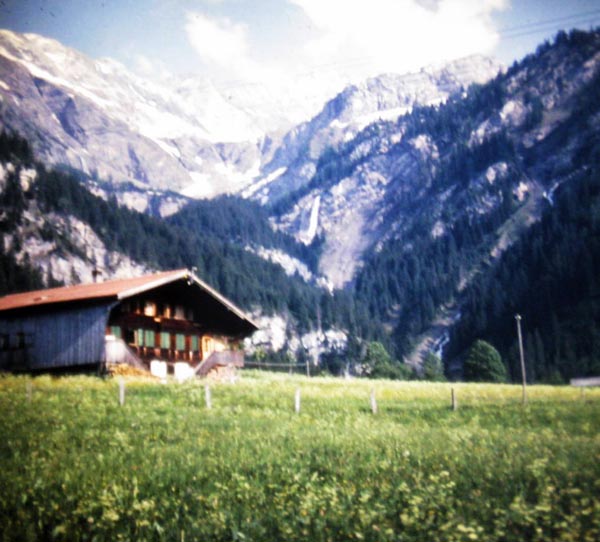 Chalet Gander Gsteig, Switzerland Johann's Swiss Home, 20 miles east of Lake Geneva Photo Courtesy Danielle Tanner, Sequim, WA * circa 1960s |
To emigrate 7,000 miles from Switzerland to Bickleton, the
family had to
purchase steerage steamship tickets from France to the
New York, cross America by a
series of early railroad lines ending with a
recently-completed link operated by the Oregon Railway and
Navigation Company. |
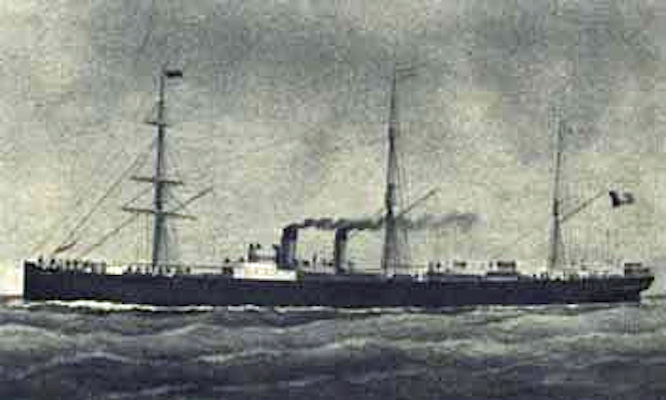 Labrador Compagnie Generale Transatlantique (From the Wood/Vorwerk Family Project) |
Larry's Great Grandfather first made the trip from Switzerland on the French passenger ship, "Labrador." He would later return for the rest of his family on the Normandie. They arrived in New York on Sept. 1, 1884 and took railroad lines to Oregon. |
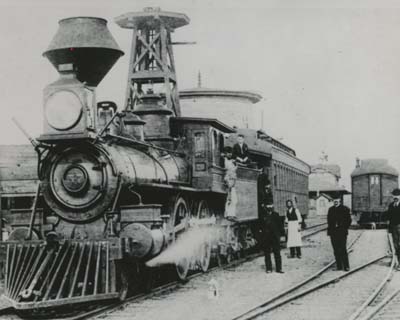 Oregon Railway & Navigation Engine 57 Typical 4-4-0 engine of the 1880s Heppner, Ore. (Oregon Historical Society) |
The train appears to have followed the Northern Pacific route from St. Paul, Minn., to Wallula (near Tri-Cities). At Wallula, The Ganders rode on a three-year-old rail line operated by the Oregon Railway and Navigation Co (eventually purchased by the Union Pacific.) It dropped them off at a new railroad station at what is now called Arlington, Ore (then called Alkali.) |
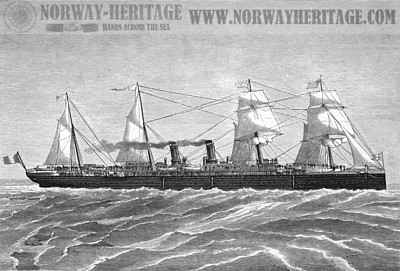 "Normandie" Ship that carried Leah and young Sam Ganders from Le Havre, France, to New York Arriving September, 1884 |
The
last 30 miles of their trip to Washington Territory may have been the most trying.
Six of the 22 pine trunks that L'ea brought with her were
blown into the river during the difficult Columbia ferry crossing
between Alkali, Ore., and what is now Roosevelt, Wash.
However, all of the trunks were recovered on nearby river islands. Over a period of 15 years, they "Americanized" their Swiss-German name to "Ganders" a feeble try to avoid teasing of their children in school with rhymes like, "Goosie Goosie Gander." Johann Jakob, who also went by Jean Jacques Gander on the ship's registry, became known simply at J.J. L'ea preferred the French Jean Jacque name. But L'ea changed the spelling of her own name to Leah..The family was one of the earliest in the area to raise wheat and was also involved in cattle ranching and Percheron horses. |
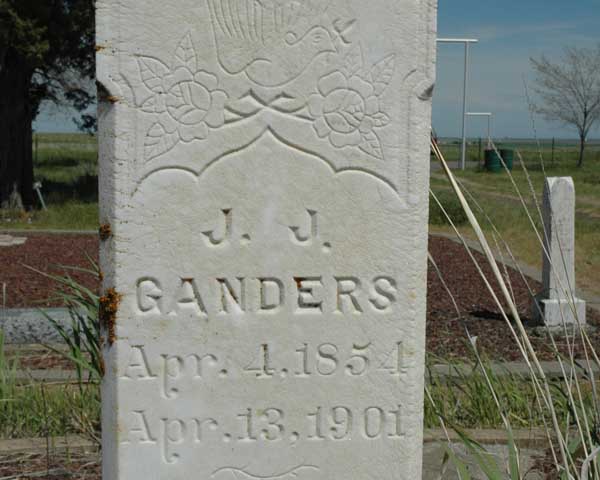 Headstone of J.J. Ganders Bickleton IOOF Cemetery (2011) |
The
family farm home was moved to the O'Brien homestead
and soon included what was known
as the "Wilber Carrell Place," homesteaded by the Carrell
family in 1904. The Ganders home was on or near that
property. JJ was seriously injured when his wagon went over the Spring Creek canyon wall hear his home. The accident led to JJs death in 1901 and Leah became a single mother of a family of eight children. Leah and the children attended the church of the Brethren.** |
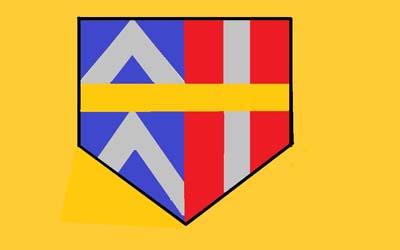 Drawing believed to represent descriptions of the Gander Family Coat of Arms, perhaps dating back for centuries. The source was a seal used by JJs Grandfather, Christian Gander of Switzerland 1759-1836 |
The
eldest of nine children and only Swiss-born child, Sam, at 18 years old, assumed much of the role of
father. His strength and impatience were legendary.
He
reportedly rose from a sick bed with typhoid fever to roll
six 300 pound bales of gunny sacks from a burning barn. He
was said to have cured himself of a chest injury by gulping
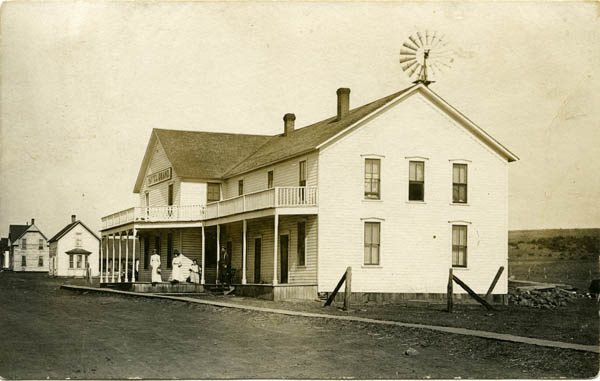
turpentine. He managed farm operations and also worked at the "Bank of Bickleton" which was formed in 1903 and merged with "Community State Bank" (of Mabton) in 1931. Sam was on the board of the merged bank. Sam married Olive Nye, the daughter of the owner of one of two hotels in Bickleton, the Hotel Grand. She was a graduate of what is now Central Washington University and taught elementary school at nearby Dot School. She was a descendent of the Civil War pilot who ran the blockade at Vicksburg for General U.S. Grant. |
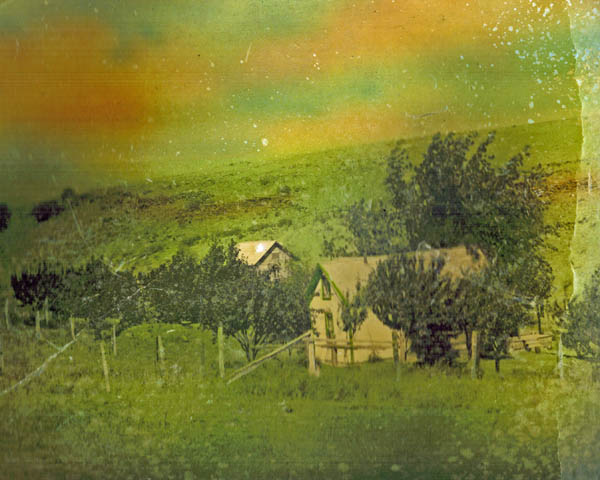 Very early photo (early 1900s?) of the Ganders farm in Bickleton. |
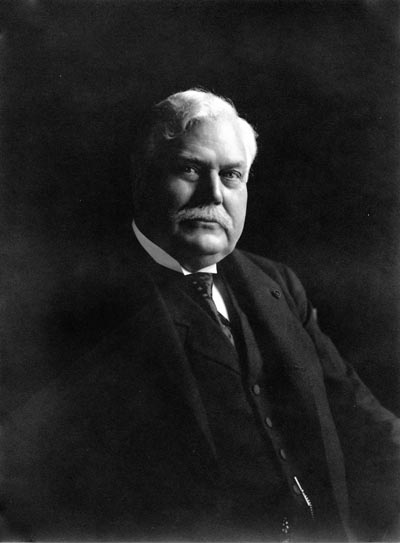
Sam and Olive gave birth to Stanton (Larry's father), sister
Ruth, and brother Dean. Dean rebuilt crashed airplanes, flew Hanford security
during the Cold War, and built some of the first hangars at Vista Field in Kennewick. Ruth
served in the Women's Army Corps (WAC), studied literature
at Edinburg University, Scotland, and was a proofreader for
a Seattle newspaper. |
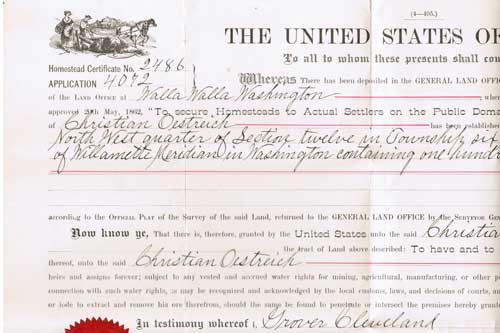 Original Oestrich homestead agreement, 1886 |
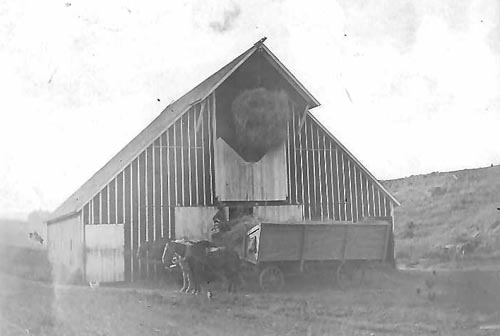
Sam purchased 480 acres from the farm of Christian & Annie Oestreich in 1916 (Originally homesteaded by Christian Oestrich and Edward Duffy in 1886 & 1888.) Sam and Olive made their home on what was called the "Oestreich Place." The farm had distinctive white buildings with green roofs, a Delco-Light electrical system that fed glass batteries and provided electricity from the pumphouse before the advent of power lines, a smoke house, a bunk house, a chicken coop, a large barn built with wooden pegs (not nails, a garage, a wagon or implement shed, and a farmhouse with a white picket fence. There was a stained glass window in the master bedroom. The implement shed housed the family wagon and buggy until the 1970s. The barn is still located off "Gander Road" near the home of Bill and Lynn Mains. |
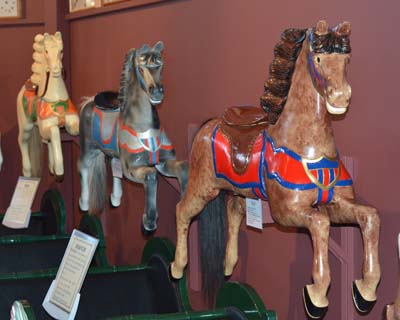 Horses from the Bickleton merry-go-round on display in Bickleton. |
In 1929, Sam was among three Bickleton men that negotiated
the purchase of a unique merry-go-round that is still an
operating attraction at the annual Alder Creek Pioneer
Picnic near Bickleton. The 24-horse Armitage Herschell/Herschell-Spillman carousel was built in New York between 1890 and 1907. The technology is unique because the horses rock but there is no overhead mechanism. There are less than ten still operational in the U.S. Sam Ganders was also the local host for Queen Marie of Rumania when she visited Sam Hill at the castle/mansion that is now the Maryhill Museum. |
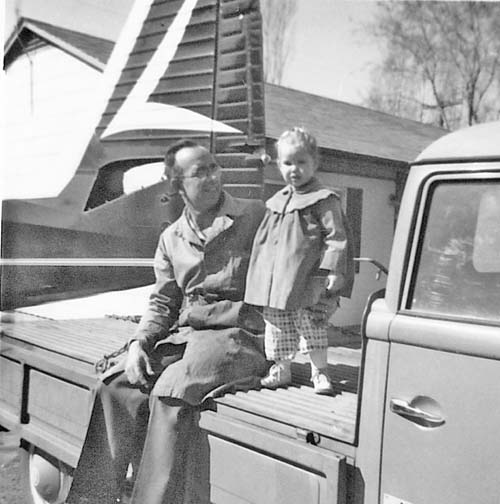 Pilot Dean Ganders and his daughter, Lori, sitting on the Ganders' Volkswagen pickup truck at their home in Richland, Wash. in March 1962. Dean flew an airplane during the Cold War to patrol the fencelines at the Hanford Nuclear Reservation. (Photo courtesy of another daughter of Dean Ganders, Becky Decker.) |
In 1937, Stanton
purchased 480 acres from Thomas and Ada Hooker. The Hookers had farmed in Bickleton after homesteading in 1882. The former Hooker home on Ferguson Road became Stanton's home. It still stands today as the home of the Juris family, also painted white and green. The Hooker place also had a large red barn, a machine shed, a shop, a quonset for grain storage, and a pig pen; The buildings, except for the barn and pig pen, still stand today. Stanton tried his hand at raising sheep but focused on raising polled herefords, wheat and barley. Stanton continued to farm the Hooker Place, the Oestreich Place, the Wilber Carrell Place (a 1904 homestead), and other Bickleton family property farmed by his parents and grandparents. He acquired the Beckner Place, which once was the site of a dance hall and artesian well on the Mabton-Bickleton road on the Yakima County side of the Yakima-Klickitat County line. |
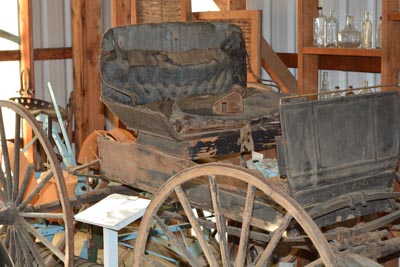 1800s Buggy Owned by the Ganders Family Bickleton Whoop 'n Holler Museum |
Among other previous owners of the property farmed by the
Ganders were Robert M and Almeda Graham, 1872
immigrants. Their child was the first caucasian child born in the region. Graham, who came over the Oregon Trail with seven oxen, operated a stage between Bickleton and Mabton. John Skiller, who loaned John Bickle the resources to purchase property for a trading post that became Bickleton, was also a previous owner of Ganders lands. Some of the lands were also part of the 1896 Land Grant to the Northern Pacific Railway Co, which never built the much-sought railroad to Bickleton. Additional previous owners were Joseph Anton Marschall (1887), Clovia and Eugene Plaquet, who homesteaded in 1896, Ralph Cosens, John Hager, Henry A. and Josephine Hussey (1883), Joseph A. Marshall, CL and May Weaver, and Swen K. Anderson. Some of the early deeds were notarized by Sam Flowers, original co-owner of the Flowers and Bickle trading post that became Bickleton. |
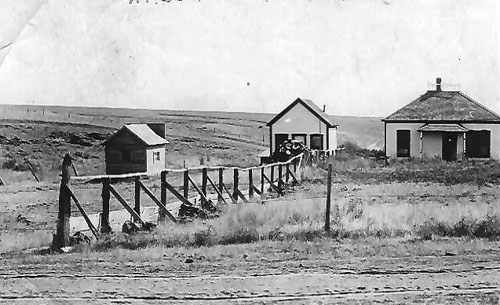 Wilbur Carroll Place Stanton's Birthplace |
Stanton married Elizabeth (Betty) Fraunfelder, also a
Swiss-German immigrant and professional Swiss entertainer
performing at a club meeting in The Dalles-Hood River area
where he was campaigning for the state Senate. Stanton was a state senator from a district that included Bickleton, Yakima and Tri-Cities. In about 1951, he won chair of the Senate Roads and Bridges Committee after crossing party lines to give minority Republicans control of the state Senate leadership. He was often credited with being the politician who made possible construction of the Blue Bridge between Kennewick and Pasco. Children Larry, Linda (Johnson) and Lisa (Yoshida) were born in Yakima, about 70 miles from the Bickleton farm. Stanton ran for Congress in 1958, losing a close primary election bid. He lost again by a wide margin in 1960. |
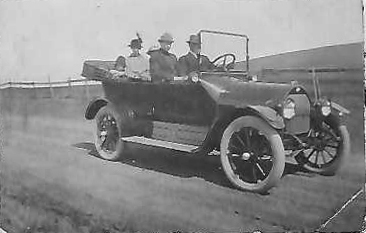 Sam Ganders First Car |
In
1961, Stanton and Betty moved their family to Spokane where
Stanton worked for the U.S. Department of Agriculture and
managed millions of dollars in federal farm assistance as
executive director of the Agricultural Stabilization and
Conservation Service.
They later lived in Olympia, where both are now buried. Larry lives in Olympia. Lisa and Linda live in Spokane. Click HERE to view Ganders-Fraunfelder family tree. |
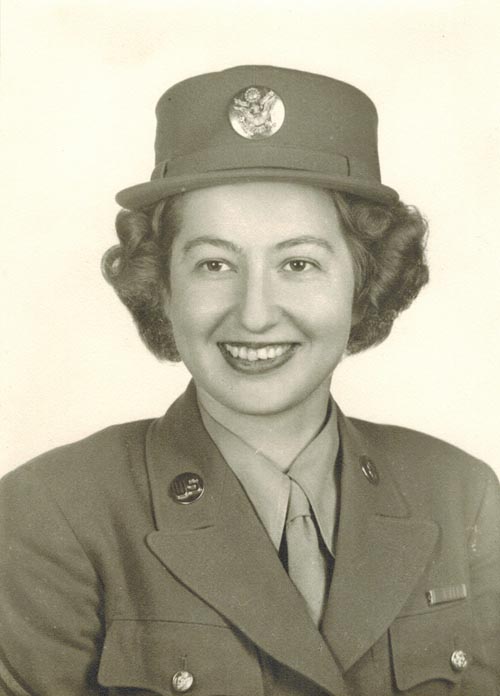 Ruth Ganders Photo courtesy Steve Ganders |
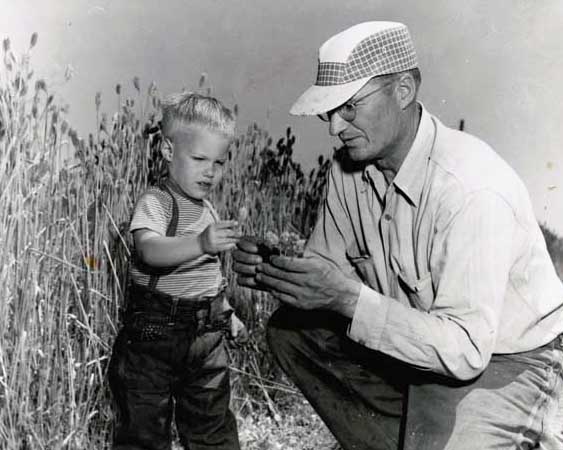 Stanton Ganders and Larry; Bickleton wheat farm, About 1958. |
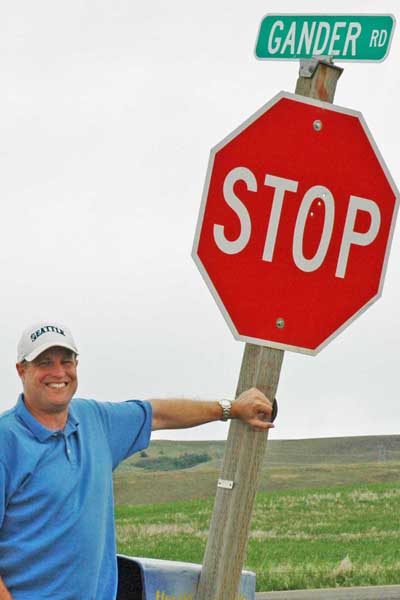
Right, Larry Ganders, 2005 |
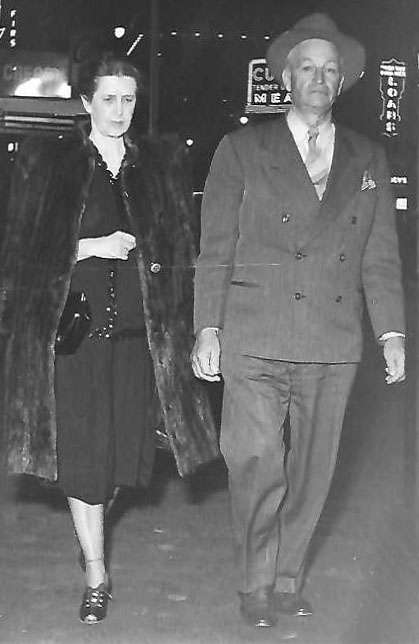 Sam & Olive, Phoenix 1948 |
|
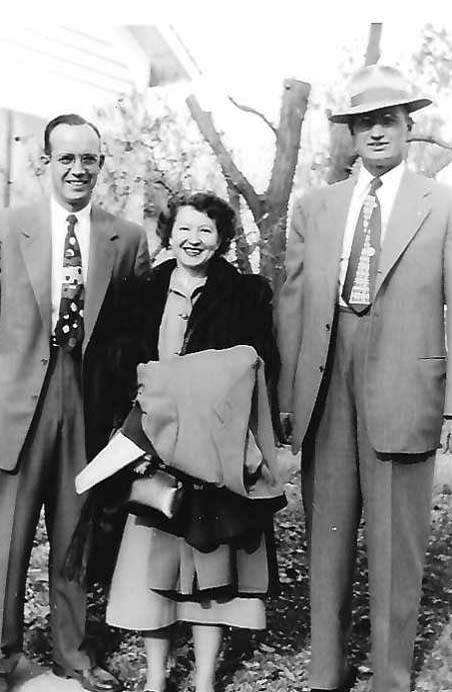 Dean, Ruth Helen and Stanton Ganders |
|
|
|
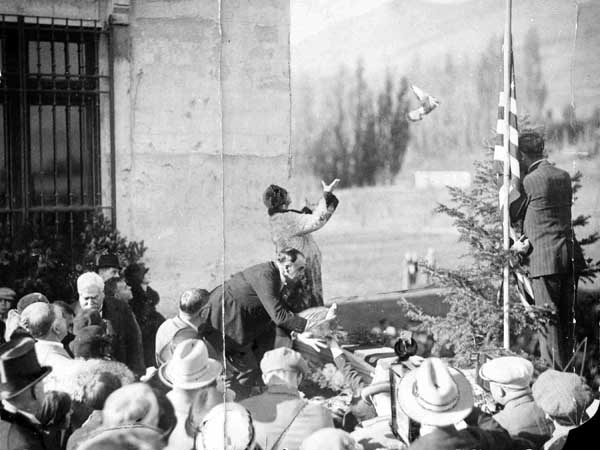 Queen Marie of Romania
|
|||
|
Goldendale, WA; Klickitat County (Photo courtesy of the Maryhill Museum of Art) Sam Hill invited trip also included New York ticker tape parade and White House event by President Calvin Coolidge |
These web pages are produced and managed by Larry Ganders
-- relying heavily on two publications: "Pioneering Ganders" (1974) and "Horse Heaven Hills" (1977) Both authored by Harry S Ganders 1894-1978 (originally born Obed Ganders), Bickleton native and one of nine children of JJ and Leah Ganders; Founding Dean of Education, and Graduate School Dean, at Syracuse University Published by Syracuse University Printing Services and copyrighted 1974, 1977 -- Information also gleaned from the family's own records, deeds, and recollections and... -- "The History of Klickitat County", 1982, Edited by Pete May (who was one of Larry's journalism mentors), Published by the Klickitat County Historical Society, Goldendale, WA. --Early History of Klickitat County, Copyright 1977 by Jim Attwell. -- Early Klickitat Valley Days, by Robert Ballou, Copyright 1928, from the library of Samuel F. Ganders -- Special thanks to Klickitat historian Ada Ruth Whitmore and Sandra Powers, both of Bickleton, for their assistance. Additional thanks to everyone at the Eastern Klickitat County Historical Society and the Bickleton Carousel Museum. -- Thanks to State Archivist Steve Excell and his staff in the Washington Secretary of State's Office for assistance on the Stanton Ganders history -- Ship registry information confirmed through Ancestry.Com, Norway Heritage.Com, and TheShipsList.Com -- Linda and Paul Johnson of Spokane, WA provided some of the photos on this page. Linda is Stanton's eldest daughter. * Danielle Tanner, a descendant of JJ's father, Johann Gander (1818-1897), and granddaughter of William Gander (son of David E. Gander, JJs brother) provided the 1960s-era photo of Chalet Gander, which was Johann and JJ's home in Gsteig. ** An Illustrated History of Klickitat, Yakima, and Kittitas Counties, 1904, Interstate Publishing Company *** Historical Biographisches Lexikon der Scheweiz, vol. 3 & 5, Neuchatel 1926 & 1929, records the existance in 1324 and 1353 of Saanenland families bearing the name Gander that are very likely related to this family. Similar names from the Cantons of Uri and UnterWalden and Southwest Germany are not likely related. Additional sources were cited by Harry Ganders in "Pioneering Ganders." |
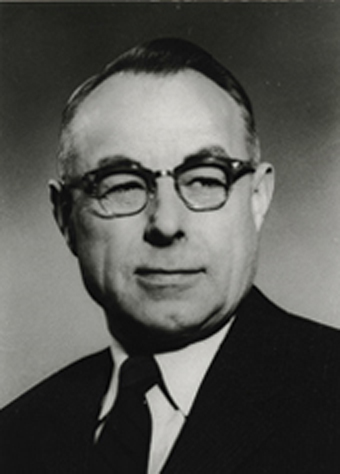 Harry S. Ganders |
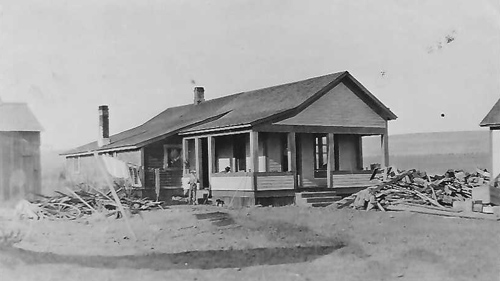 Oestreich Place Sam Ganders Last Home During Renovation |
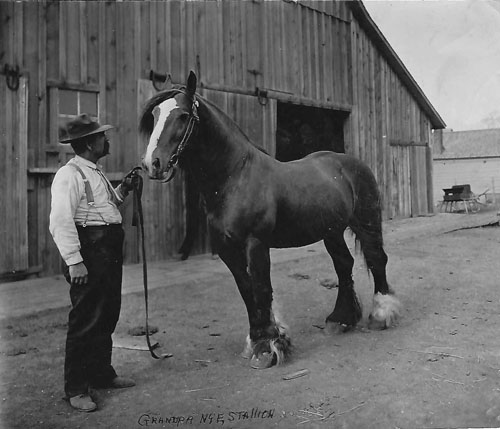 Wilbur Nye and Percheron stallion. |
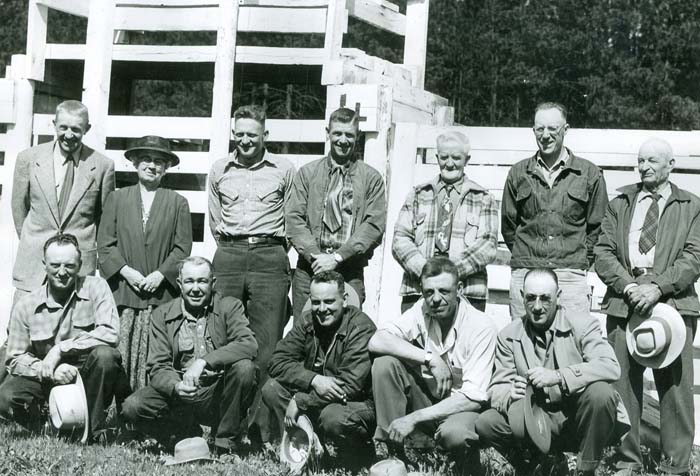
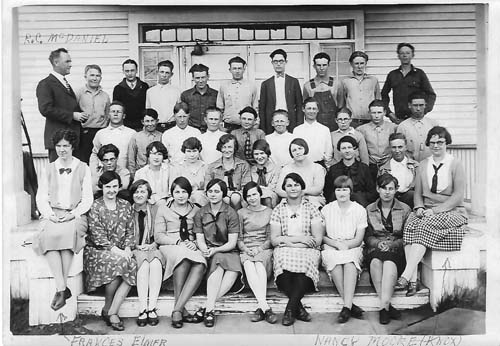 Stanton's classmates |
|
Ganders.Com is maintained by Larry Ganders This page updated March, 2023  |